
When a resident drops a plastic bottle into a recycling bin, there is a reasonable expectation that it will be transformed into something else. That expectation is partly accurate — but which plastics, processed by whom, under what conditions, and transported where, determines whether the expectation holds. Singapore's recycling infrastructure is real but uneven, and understanding the distinctions by material type produces a more accurate picture of what individual actions actually achieve.
The information below reflects the state of Singapore's recycling infrastructure as of early 2025, drawing on published NEA data, industry reports and academic research from Nanyang Technological University and the Singapore Institute of Technology.
Paper and Cardboard
Paper is one of the highest-performing categories in Singapore's residential recycling stream. The country has a functioning paper recycling industry, with several local operators and strong regional export markets — particularly to mills in Malaysia, Indonesia and China. Clean, dry paper can be repulped and reprocessed into new paper products with relatively low energy input compared to virgin pulp.
The major contamination vectors for paper are moisture and food contact. A pizza box with grease on the base cannot be repulped — the oil interferes with the pulping process. Wet newspaper or cardboard loses structural integrity and typically cannot be sorted economically at the MRF. Clean cardboard boxes from deliveries, however, are among the most reliably recycled materials in Singapore when deposited dry.
In 2023, Singapore recycled approximately 1.05 million tonnes of paper and cardboard — the second largest recycled category by weight after construction waste.
Metals
Aluminium and steel are the most consistently recycled metals at the household level. Aluminium cans can be melted and reformed with around 95% less energy than producing new aluminium from bauxite. Singapore exports recovered aluminium to regional smelters in Malaysia and Thailand.
Steel cans — for food and beverages — are similarly recycled through a magnetic separation process at MRFs. Singapore's scrap metal trade is well-established, with several licensed scrap dealers operating collection yards accessible to residents and commercial operators alike. Ferrous metal recycling in Singapore achieves rates above 80%, though this figure is dominated by industrial and construction scrap rather than household items.
Plastics: The Complex Picture
Plastic is where the gap between assumption and reality is widest. Singapore uses the standard SPI resin identification codes (1 through 7) to classify plastics, but knowledge of these codes among residents is limited and bin signage does not specify them.
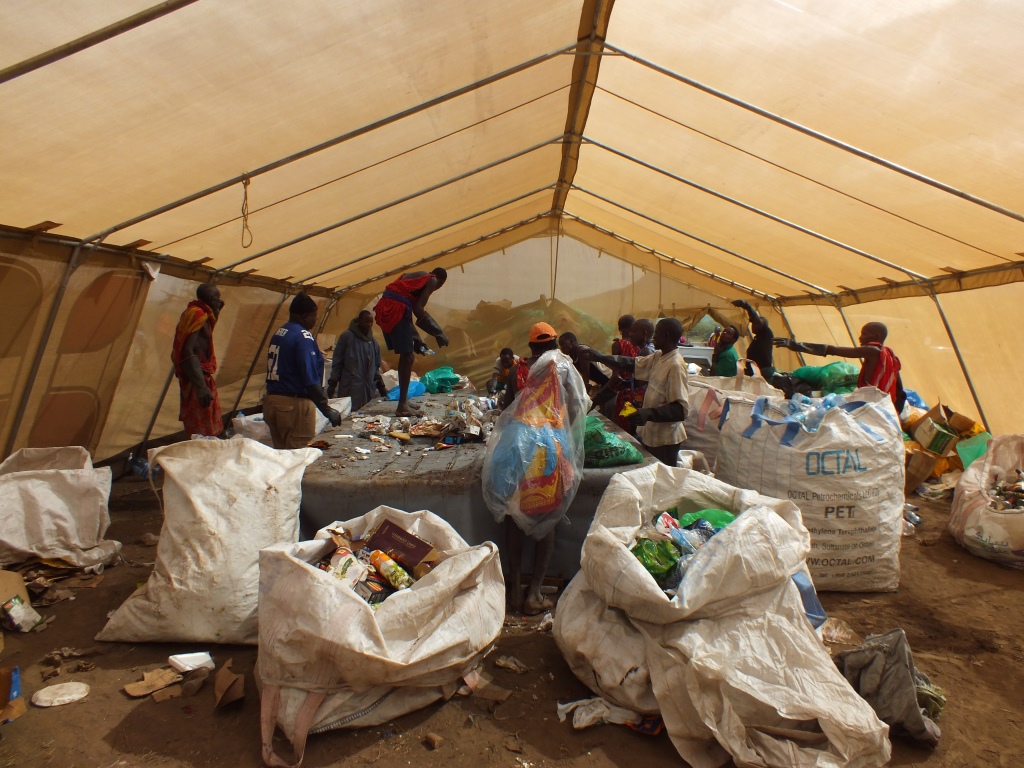
- Type 1 — PET (polyethylene terephthalate): Used in clear water and beverage bottles. Has the strongest recycling market. PET is collected, baled and exported to regional recyclers, primarily in Malaysia and Indonesia, where it is processed into polyester fibre for clothing manufacturing or new packaging.
- Type 2 — HDPE (high-density polyethylene): Used in detergent, shampoo and milk bottles. Recyclable and has reasonable market demand. Often processed locally.
- Type 3 — PVC: Used in some pipes and packaging. Difficult to recycle and releases chlorine compounds during incineration. Limited recycling market in Singapore.
- Type 4 — LDPE: Plastic bags, stretch wrap, squeeze bottles. Not accepted in blue bins. Singapore's plastic bag charge policy (introduced progressively at supermarkets from 2023) aims to reduce volume at source rather than capture these in recycling.
- Type 5 — PP (polypropylene): Used in yoghurt tubs, bottle caps and takeaway containers. Processing is possible but economically marginal given current oil prices and collection costs. Frequently incinerated.
- Type 6 — PS (polystyrene): Expanded polystyrene (EPS) takeaway containers and packaging foam. Virtually no recycling pathway in Singapore. Incinerated.
- Type 7 — Other: Multi-layer packaging, some bioplastics. No functional recycling pathway. Incinerated.

Photo: Wikimedia Commons / Public Domain
Glass
Glass recycling in Singapore is technically straightforward but economically difficult. There is no domestic glass furnace of sufficient scale to remelt glass containers into new ones, meaning recovered glass either needs to be exported or downcycled. The primary outlet for glass recovered in Singapore is crushing it into cullet, which is used as a sand substitute in construction applications — a lower-value use but a diversion from landfill.
Several dedicated glass recycling schemes operate independently of the standard blue bin. The Glass Goes Round programme, run by Heineken Singapore and other industry partners, places dedicated glass collection bins in hospitality venues and selected residential areas. Commercial establishments generate a large proportion of Singapore's glass waste and are the primary target for these programmes.
Food Waste
Food waste is Singapore's second largest waste stream by volume and among the hardest to manage at the residential level. Approximately 763,000 tonnes of food waste was generated in 2023, with a recycling rate of around 18% — the lowest among major waste categories.
The NEA's response has been to mandate food waste segregation and on-site treatment systems in large commercial buildings, hotels and food courts under the Resource Sustainability Act. For HDB residents, food waste infrastructure is being piloted in selected estates through food waste digesters that convert kitchen scraps into water and a small amount of residue using microbial processes.
Home composting is an option available to residents with outdoor space — balconies or community gardens. The NEA has collaborated with community groups to place composting bins in several HDB common areas. The output — compost — can be used in estate gardens or for potted plants.
E-Waste
Singapore's Extended Producer Responsibility (EPR) scheme for e-waste, launched fully in 2021, requires producers and importers of regulated electrical and electronic equipment to fund proper collection and recycling. ALBA E-Waste Smart operates the national collection network, with drop-off points at major electronics retailers.
Regulated items include information and communications equipment (laptops, phones, tablets), large and small household appliances, and certain components. Collected e-waste goes to licensed recyclers for disassembly, component recovery and responsible disposal of hazardous materials such as lead, mercury and cadmium.
In 2023, approximately 6,700 tonnes of e-waste was collected through the EPR scheme — an increase from previous years but still a fraction of the estimated volume generated annually. NEA's e-waste page lists current drop-off locations.
What to Do With the Uncertain Items
The practical answer for materials that don't clearly fit any category is to avoid placing them in the blue bin. Contamination from non-recyclables is more damaging to the overall system than simply sending an ambiguous item to incineration through the general waste stream. The incinerators in Singapore — designed for mixed waste — handle a wide range of materials safely. The blue bin's value depends entirely on the quality of material it collects.